Showing posts sorted by relevance for query Fall gardens. Sort by date Show all posts

Thursday, August 11, 2011

August in the Garden

Note, this was written in 2008 in Hoopa CA, while we were experiencing a large forest fire. The effect was cooler temperatures. If your temps are cool enough your tomatoes aren't ripening, you will find useful tips. You will also find recipes for summer squash and starting the fall garden, as well as a quick review on a great little herb book.

Digging the Dirt / August in the Garden

Published in the Two Rivers Tribune 8.08
Copyright 2008, Harvest McCampbell

Gardening in smoke leaves much to be desired. Some plants, however, seem to be making good use of all the carbon in the air. My tomato plants are nearly as tall as I am. On the down side, the smoke has been keeping things too cool for them to ripen up properly. Green tomatoes are not as yummy as their fully ripe counter parts, but they do make good eating. I have been searching for green tomato recipes, just in case. Here are a couple of fun books from the Humboldt County Library that will help you use up any green tomatoes you may have on hand at season’s end.

Preserving Summer’s Bounty, by Rodale Press, has recipes for Green Tomato Chutney and Green Tomato Pickles, as well as lots of recipes for those other summer favorites—squash and Zucchini. In fact, no matter what your garden is producing, you will find recipes and information on preserving it for winter use. The Joy of Pickling, by Linda Ziedrich adds curried and limed green tomato pickles to the possibilities, as well as pickled green cherry tomatoes. Ziedrich has recipes for just about anything you grow, including Jerusalem artichokes and turnips! You can request these books from your favorite library or bookstore. They will definitely get your kitchen creativity stirring.

More Produce in the Kitchen

Squash seems to produce bumper crops no matter what the weather, and this year is no different. Folks will soon be ducking and running when they see their gardening friends hoisting bulging bags. Whether you are growing your own or trying to use the squash that has been foisted on you, here a few ideas from my kitchen. The first uses fresh squash in a sandwich with tuna, and the second makes a refreshing salad.

Summer Tuna Sandwiches or Wraps: Combine grated summer squash, a bit of diced onion and pickle, with a can of tuna, and a tad of mayo. Mix well and then spread on bread or a tortilla, add fresh lettuce or other greens, and serve it up. The pickles I have been using are made with zucchini and summer squash wedges substituted for the cucumbers. I use the dill pickle recipe from the book, Joy of Cooking, (the library has this one too). This sandwich gets rave reviews.

Sunny Summer Salad: Dice up a mix of fresh tender zucchini and summer squash, in different colors if possible. Add a few tender young snap beans and the youngest leaves from kale, mustard, beets, or turnips. Diced peppers, cucumbers, or tomatoes can also be added. For a quick, fresh dressing combine olive oil with a dash of vinegar, and some fresh diced basil, parsley, rosemary, or other garden fresh herbs, shake well and taste. You can add more vinegar or herbs or even some salt and pepper. Pour a little over your fresh veggies and toss to coat. Give it a taste and add more of your dressing if needed. Refrigerate to chill, and then serve on a bed of lettuce. (Add some shredded chicken or browned sausage or tofu and call it dinner.) This easy salad taste even better the second day!

Fall Gardens Start Now


You can have fresh carrots, parsnips, and peas for Thanksgiving if you start soon! You can also grow many greens, root crops, broccoli, cauliflower, and cabbage. Your favorite lettuce, radishes, or beets do great when the weather is cool. Just about the time your summer garden will give out, the fall crops will kick in, keeping you in fresh produce—if you plan it right, not just through the fall, but straight through until spring is here again.

If you have room to put in some new garden beds, you can start fall crops right in the ground this month. Cover seeds with a fine sprinkling of sifted compost or store bought soil conditioner, and keep an eye on your beds. Some people like to lay a board over their rows, to help keep the soil moist. If you give this a try, you will need to lift the board morning and night, to check for germination. As soon as you see seedlings bursting from their seed coats, it is time to remove the board. Seedlings must be kept evenly moist for at least the first week, so check them every morning and evening.

Those already using every inch of space available can start most of their fall garden in six packs. Move the plants to larger containers as necessary, and then tuck them into the garden as soon as a spot is cleared. (Be sure to dig in some compost and top dress with mulch.) The only fall crops this won’t work well for are those we grow for their roots. Carrots, beets, turnips, parsnips, radishes, and rutabagas, to name some of the more popular root crops, do much better when planted where they are to grow. Starting them in shallow containers and then transplanting tends to ruin their comely figures. They are happy growing in half barrels or large containers, and they are safe from gophers if you take that route.

It is time to get out your seed box, seed catalogs, or visit seed counters and see what yummy veggies this fall will bring. If you want to try something new, Wild Garden Seed offers a number of tasty and colorful additions for the fall garden. I am going to try their broccoli, which is named Purple Peacock. This pretty loose headed broccoli has purple stems and leaf veins. All parts are tender and edible, including leaves and stalks. It was rated very highly by Organic Gardening Magazine, for taste, appearance, and winter hardiness.

They also carry Bulls Blood beets, with their electric purplish red leaves. I have some of these started already, but I am going to tuck some seeds into the pots by my front walk, they are that eye catching. I can hardly wait until they get big enough to eat!

Kale is another tasty and nutritious fall crop. Wild Garden Seed offers a number of different types. They also have 53 different types of lettuce, and three different seasonal salad mixes. You can shop on-line: http://www.wildgardenseeds.com or call them to request a catalog: (541) 929-4068

Ancient Herbs

The J. Paul Getty Museum in Los Angles has published a slim but elegant volume for all those passionate about ancient Greece, Rome, and the wonderful world of herbs. Ancient Herbs is a work of art, lavishly illustrated with historic botanical drawings from the late 1700 and early 1800’s. The text provides copious hints on the changing place of herbs throughout human history, as foods, medicines, and flavorings. While you won’t find exact instructions for growing or using herbs, you will find plenty to stir your curiosity and whet your appetite to learn more. This would make a great gift for herb lovers, cooks, and gardeners. The cover is lovely enough to make the book a welcome addition to the kitchen bookshelf and displays of botanical or herbal related art. Ancient Herbs, by Marina Heilmeyer, Published by The J. Paul Getty Museum, 2007, no ISBN


Saturday, August 25, 2012

A Few Thoughts on Starting Seeds . . .


Here at the end of August the weather is cooling off, barely, and I am struggling not to be a seed starting fool.  I have a flat of older seedlings that I move around on the sun porch several times a day, to take best advantage of the light.  In addition I have two flats of newly planted seedlings and one intensive care flat of new cuttings and divisions.  (Not to mention the cuttings in water in the kitchen window, young trees in containers, misc. container plantings, and other things planted in the yard.)

Poking seeds into potting soil is an easy enough task.  However, if that tasks turns out to be successful, tending the plants, potting them up into larger containers, and eventually chipping away at the hard adobe soil out in the yard are not so easy.  There must be a limit!  

In the wild, plants produce anywhere from hundreds to thousands of seeds for every one that successfully grows, matures, and sets seed of its own.  The odds are stacked against the survival of every individual seed produced.  The survival rate of the seeds that find their way to our hands can be better (or sometimes worse) than those seeds produced in the wild.  Growing plants from seed successfully, requires us to understand what the particular seed we are growing needs to thrive; and then being able to deliver those conditions right on time.

When we purchase seeds in packets, especially the more common types of seeds, most of what we need to know may be printed right on the packet.  We need to understand that these instructions are generally not negotiable.  For instance, most seeds need to be kept evenly moist but not soggy to grow.  If we let the garden bed or potting soil dry out, particularly if that happens at just the wrong time, the seeds or seedlings will do what most wild seeds do everywhere—they will die their little tiny deaths.  

Gardeners use many strategies to keep their newly planted seeds and seedlings moist.  My seed starting shelves are the perfect size to hold a single nursery flat on each shelf, and the shelves themselves are wrapped in clear recycled plastic to admit light and hold in moisture.  I start my seeds in six packs and small pots placed within the nursery flats.  I initially pour about an inch of water in the bottom of the flats to give the soil and the seeds a good soaking, and then, with a spray bottle, I keep the surface moist throughout the following days.  This takes a lot of attention, but I gladly give it.

But there are ways to get around paying so much attention.  The more you read about seed starting the more techniques you will find.  Most long time gardeners have used many techniques over their lifetimes and they have settled down with something that works for them.  Some have small green houses with misters running on timers, some use special wicks or self watering arrangements available through garden and nursery supply catalogs.  On the other end of the spectrum you will find gardeners that just throw the seeds on the ground.  In my Hoopa garden, which much of this blog was written about, this was absolutely my favorite (but not only) technique.  

Here in my new home in Lucerne CA, I have found that throwing the seeds on the ground only feeds the bugs and the birds.  So, I have adapted, as gardeners everywhere must adapt.  What works in one place and for one person, will not necessarily work in every place for every person.  Don’t give up if you have so far failed.  Remember, the odds are very much against the seeds; there is no way you are ever going to kill as many as have died in nature.  If at first you don’t succeed, try try again.  

I hope to find myself organized enough to bring you some more thoughts on starting seeds in the coming weeks.  In the meantime, below are some links to more information.  The first is an article on starting seeds that discuses temperature, light, and other germination requirements and supplies, as well as books and websites for more information.  At the second link you will find lots of information on fall planted crops that you can start from seed over the next few months, depending on your weather.  Happy gardening! 


Seed Secrets:

Fall Gardens:

Saturday, November 04, 2006

Fall Greens


Young Kale and Mustard plants sown in the fall.
Many edibles practically care for themselves during fall and winter. Cilantro, lettuce, fennel, mustard, chard, and kale, among others,  love the weather ahead. Cool moist temperatures, and lots of rain bring us sweet delicate greens for our fall and winter soups and salads. Now is the time to get these delectables growing, if you can just find the space.


Cool season greens are lovely to look at, especially as fall grows old and winter comes to visit with its cold, grey, and stormy days. Lettuce can look quite perky when the rest of the garden is bedraggled by rain. It is available in all shades of green from very pale to very deep. There are varieties with speckles, and splashes of purple or red, and other varieties that boast deep red or purple leaves. All these colors of lettuce come in a variety of leaf forms from the large simple leaves of romaine to frilly butter crunch and lacy oak leaves. No room in the garden? A few pots or containers growing lettuce will look attractive on a patio or porch!

If you have a large pot (or an empty spot in the garden or flower bed) Red Giant Mustard would make a dramatic back drop for the smaller and more delicate lettuce plants. Or if you like the red and purple lettuce types, Giant Southern Curled Mustard (also called Green Wave) with its pale green leaves would make a fitting back ground for your fall container garden. Swiss chard is another interesting plant that will eventually grow quite tall, and the newer hybrids come in a multitude of stem and leaf vein colors.

Fall sown mixed mustards growing like crazy with the longer days of spring.
 There are also many lovely types of kale, in a variety of colors and leaf shapes. While they start out small and delicate - many grow up to make large interesting plants. Look for Red Russian Kale, Red Bore, or Dinosaur Kale. The young leaves of all these plants make good additions to salads, the older leaves are great for soup, and the plants make a dramatic statement in a pot or out in the garden.


Cilantro and fennel both love cool wet weather and they will thrive in the garden or in containers on a bright porch or patio. They add flavor to winter salads and soups, as well as a delightful fragrance to the air. Their lacy leaves also add textual interest to the garden or groups of container plants.


Fragrant and tender Fennel!

There are several steps to creating an attractive fall container garden, not the least of which is collecting your containers. Folks with ample budgets can find many new decorative containers at nurseries and garden centers, as well as original pieces from galleries and antique stores. The rest of us can be content with second hand and dollar store finds or recycled items from around the house.

Empty coffee, juice, and other large cans (at least 3 inches in diameter), make great containers for growing greens. You can also cut the tops off of empty plastic containers (such as milk and juice jugs, soda and water bottles, soap and bleach containers) and use them as containers. Make sure to thoroughly wash any residues from containers that contained household supplies. You can use a hammer and nail or a can opener to make drainage holes on the bottom of cans, or a sharp knife or awl for plastic containers. (Be careful!) Next add a few rocks to improve drainage and keep your container from getting top heavy as your plants grow. Save your largest containers for giant mustards, Swiss chard, kale, or cabbage. Cabbage doesn’t get as tall as the rest, but it needs lots of room for its roots. (And it is available in a number of attractive colors and forms.)

Next you will need to supply your snazzy new containers with some potting soil. Your local nursery can make recommendations for you, or you can make your own. If you don’t have finished compost or access to leaf mould, a simple fall potting blend can be made, starting with dry leaves. You want crisp leaves that crumble into small bits when scrunched or rubbed between your hands. Old corn or squash leaves and leaves that have fallen from your trees are all possibilities. If they aren’t crisp enough yet, spread them out on a tarp or old sheet and leave them in a sunny spot. Turn or stir them once a day until they crackle and crumble when you crush them. (If rain threatens you can move them into the shed or garage until we get a sunny day.) Two parts crumbled leaves, two parts sand, and one part garden soil is a good starting recipe. If you mix up at least a gallon’s worth, you can add a handful each of used coffee grounds (for nitrogen) and wood or paper ashes (for minerals) and you are ready to get growing.

If seeds are not your thing, check out the plant starts available at nurseries and hardware stores. Many types of lettuce, kale, cabbage, and other fall greens are available right now. Simply plant them in your containers, keep them moist (but not soggy) and cool until the young plants start to grow. Once you see some new growth forming, gradually move them to the sunniest spot on your porch or patio and watch them thrive.

Fall greens are easy to start from seed. It's not too late unless your ground may freeze solid,or if you will get a heavy blanket of snow. You can plant a few seeds directly into the potting soil, according to the directions on the packets. Seeds and young seedlings will need to be kept evenly moist until they are established, and then you can enjoy their colors and fragrance, both on the patio and in the kitchen through the blustery months ahead.

Seeds are available at many hardware, health food, and grocery stores. If you don’t find what you are hoping for, check out Territorial Seed: http://www.teritorialseed.com (800) 626-0866. They have a nice selection of lettuce, spinach, chard, mustard, and cabbage varieties, and they have fennel, cilantro (listed under coriander), as well as a mixed packet of colorful kales that I would love to try.

If you are searching for seeds on a budget, don’t forget to check with friends, relatives, and neighbors who garden. Many people save their own seed, and others are unable to use all they purchase. Gardeners are usually happy to share when they have more than they need. And you might just make their day by asking. Most gardeners love to show off their gardens and share their tips to success.


Copyright 2006 Harvest McCampbell, from my column "Digging the Dirt," published in The Hoopa Valley People Newspaper, Nov. 10, 2006. Posted here with permission. http://www.hoopa-nsn.gov/enterprises/newspaper.htm

Edited and photos added, 11.13.2016.  Copyright Harvest McCampbell.  Please feel free to share via the buttons below.  All other rights reserved.

Friday, August 21, 2015

Food Riots?


"That's the year they had food riots in Calcutta and Rio and Manila, when the world was finding out that it was easier to produce eleven billion living human beings than to feed them." 


Mike Resnick, in the story, 'Old MacDonald Had a Farm,' from the collection of his work, 'New Dreams for Old.'  This is a work of fiction, however, it is much truer than any of us would like.

~~~

 Right now, the world has about 7.3 billion people. It is estimated that we could reach 11 billion by 2060. That is less than 50 years from now. All things being equal, many of our children will still be alive, as will our grandchildren . . .  

"The United Nations Food and Agriculture Organization estimates that about 805 million people of the 7.3 billion people in the world, or one in nine, were suffering from chronic undernourishment in 2012-2014." 

"About 21,000 people die every day of hunger or hunger-related causes, according to the United Nations. This is one person every four seconds, as you can see on this display. Sadly, it is children who die most often." http://www.poverty.com/

Food riots are real.  They began happening in Europe in the 1700's.  However the earliest food riots were more about political maneuvering that  brought about high prices than they were about real food shortages.  Here is a list of some historical food riots with brief descriptions and links to more information:  https://en.wikipedia.org/wiki/List_of_food_riots

In 2013, high food prices fueled Egypt's riots—and those in Brazil, Turkey, and Syria:
http://motherboard.vice.com/blog/high-food-prices-are-fueling-egypts-riotsand-those-in-brazil

Food riots continue to happen in our modern world. Rioting and looting in Venezuela this year has become common, over food shortages brought about, at least in part, by politics. http://www.businessinsider.com/venezuelas-food-shortage-keeps-getting-worse-2015-8

Food shortages are expected to worsen over the next few years, and they are expected to be less based on politics and economics and more based on the fact that, because of high populations coupled with the effects of climate change, we won't be able to produce enough food for everyone.  " . . . the Impending Global Food Crisis is Real and is due to Happen in the next 15 Years."

" . . . climate change is contributing not just to melting ice caps and rising sea levels, but also to drought, food shortages and, ultimately, to global instability.  

~~~

What can you do? Eat lower on the food chain. The less animal protein you eat, the more grain is left for other people to eat. Don't eat more food than you need. Don't buy more than you will eat. If you are throwing away uneaten food on any kind of a regular basis, you are placing more demand than necessary on the world's food supplies, which contributes to rising prices, which is pricing poor people out of a place at the table. Grow a garden! The more food we can produce ourselves, the less demand we are placing on world food supplies and the more affordable food will be for the poorest people.  For more ideas on what you can do, check out my book, Food Security and Sustainability for the Times Ahead.

Park your car and grow something!  Please check out my article, Carbon Production = Oxygen Consumption.

Become a food producer.  Now is the time to think about fall gardens, which are the easiest gardens to grow.  In addition to the greens covered at the link below, most roots do well in the fall also:  http://harvestsgardeningsecrets.blogspot.com/2006/11/fall-greens.html

~~~

If you have tips or questions on reducing your demand on world food supplies or starting a garden and becoming a producer, please leave a comment!

~~~

Please feel free to use the buttons below to e-mail, re-blog, tweet, share, or pin this post.

Friday, June 16, 2006

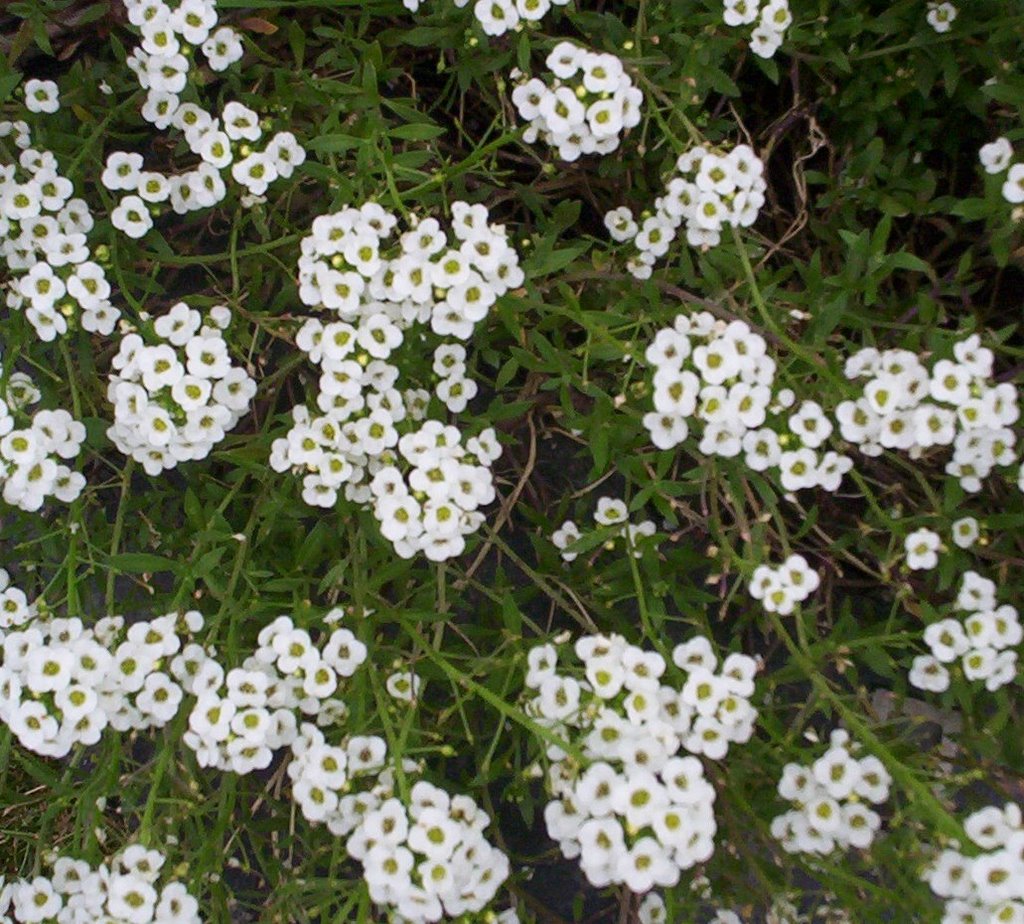
Sweet Alyssum


Once upon a time a long, long time ago I had a small market garden in Napa County. I was all of eight years old and I sold my tomatoes, squash, and flowers from a large garden cart beside the road. Warm afternoons I could be found hose in hand, keeping my garden lush and green. However, I had one spot I never watered. It was my “Magic Garden.”

The Magic Garden occupied the hottest spot in the yard. It consisted of a narrow foundation-planting strip sandwiched between the south wall of the stucco house and a long asphalt driveway. Not only was this the hottest part of the yard, it was also the wettest spot in the winter. And it was in this very spot that I first fell in love with Sweet Alyssum.

Most mornings I would wake up early and run out to inhale the fresh sweet scent of the rose and white flowered alyssum that bloomed nearly year around. I was sure that among the insects that visited the small delicate looking flowers that real fairies could be found. As hard as I worked for my other flowers, I always appreciated the alyssum, which thrived on so little care. I pulled a weed or two from time to time and other than that, they completely took care of themselves.

Pam Pierce, in Wildly Successful Plants for Northern California (Sasquatch Books) list Sweet Alyssum as one of a handful of plants that thrive in our area with little or no care. She reports finding Alyssums reseeding and naturalized in long abandoned gardens and estates. She also notes that the offspring of selected hybrids may not be as compact and the colors may not be so vibrant but that these seedlings are likely to be even tougher than their parents.

Depending on the reference, Alyssum is listed as either a hardy annual or a short-lived perennial. Plants are generally low growing, from about 3 to 8 inches tall, with nearly an equal spread when mature. They can be planted in spring or fall; if you really don’t plan to water them, plant them in the fall. That way they can develop deep roots systems before summer’s drought sets in. And they will bloom all winter, which is a great bonus. Sweet Alyssum plants make excellent rock garden specimens, edging for pathways and garden borders, and they look fabulous spilling out of window boxes and containers.

Alyssum also deserves a place in vegetable and herb gardens. Herb gardens often incorporate plants of historic or anecdotal interest. The name of this flower (alyssum) comes from the Greek and means “without madness.” Sweet Alyssum was once added to bouquets to signify forgiveness, apology, or otherwise request an end to hostilities. Today it is used in flower essence remedies to overcome anger, madness, and their after effects. While I can’t vouch for this particular theory, gardening is generally considered therapy, and what better therapy could there be than a sweet flower?

This garden therapy is also therapy for your vegetable garden. These flowers make great living mulch, and they attract beneficial insects who will stay to hunt among your plantings. Speaking of vegetables, Alyssum flowers are edible! The flowers don’t really taste anything like they smell. They have a slightly sweet and peppery flavor similar to kale. In fact Sweet Alyssum and kale are both in the Brassica family as are cabbage, cauliflower, broccoli and many other vegetables. All the Brassicas are considered nutritious and health giving. Sweet Alyssum is no exception. It was once used in Spain to treat and prevent scurvy – a condition caused by malnutrition.

While most of us won’t be serving a menu planned around Sweet Alyssum, a few colorful snips are lots of fun in the kitchen. They can be added to salad, frozen in ice cubes, folded into omelets, and added to cold summer soups. Sweet Alyssum when paired with a wedge or two of fruit or a sprig of parsley makes a fun edible garnish to dress up snack or desert trays. Be creative. How about a molded Jell-O or aspic salad with contrasting flowers nestled inside?

Sweet Alyssum comes in a pastel rainbow from white through a number of shades of rose, mauve, lilac, and purple. There are even some rare yellow and orange varieties you might run across in specialty nurseries. Most local nurseries and seed catalogs stock seeds and six packs of young plants in the common colors. Seed packets and six packs are often available in both single colors and mixes. I prefer to purchase the six packs and tuck them in here and there in the garden. The small seeds take a little care to bring to maturity and the tasty seedlings are a magnet for slugs. However, if slugs aren’t a problem in your garden the seeds can be broadcast in spring and fall. Keep the seed bed evenly moist until your plants are established and then you can ignore them if you must.

Sweet Alyssum is truly a carefree flower. It’s not particular about soil, soil amendments, fertilizer, or even water once it is established. It can thrive in full sun, or part shade. Past the seedling stage it is not likely to be bothered by pests, and it may actually reduce pest problems by attracting beneficial insects. The sweet flowers can be enjoyed over a long season, both in the garden and the kitchen. And if slugs aren’t a problem in your garden it is likely to self-sow bringing permanent delight to your borders and extra seedlings to share with your friends. If I could only plant a few flowers this season, Sweet Alyssum would be high on my list. I am sure you will enjoy them too.

Next week we will be taking a look at an easy to grow super food, that tastes pretty good too. It is high in iron, fiber, vitamins A, C, K and folate – and you can grow it all year round! Until then, you can always find me Digging the Dirt . . .

Copyright 2006 Harvest McCampbell, from my column "Digging the Dirt," published in The Hoopa Valley People Newspaper, June 6, 2006. Posted here with permission.


Related articles on attracting beneficial insects:
Beneficial Insects
More Beneficial Insects

Other Edible Flowers:
Cilantro
Daisies & Violets
Fennel
Pumpkin